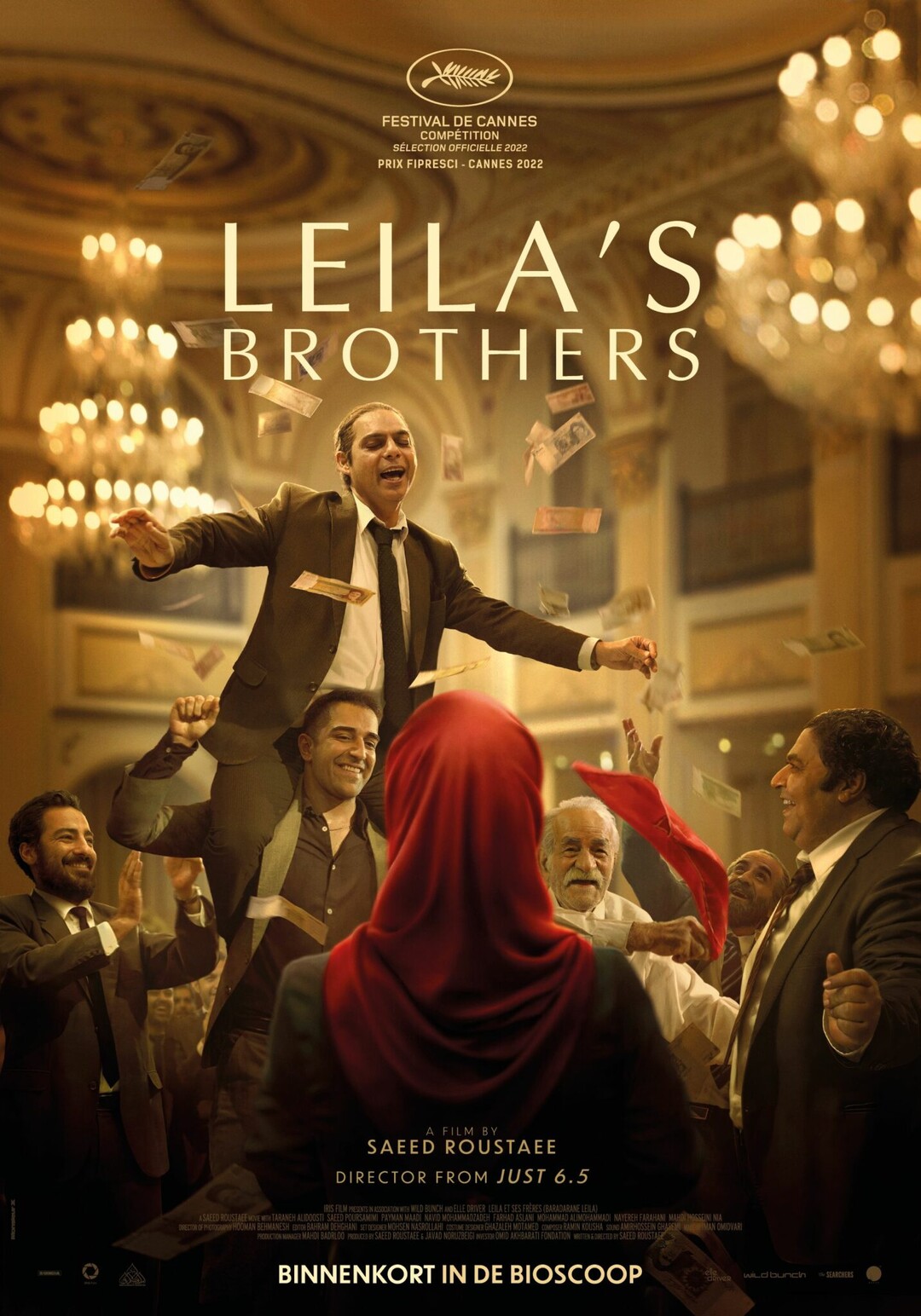
Picture yourself as the smartest and most courageous member of your family. You see a way out of the corner you’re all stuck in. But sadly, just because you’re a woman, your voice doesn’t count. That’s the tragedy of Leila. But as the title suggests, it’s not only Leila’s story; it’s also about her brothers.
“Leila’s Brothers” takes us into the lives of an Iranian family battling economic hardship in modern day Tehran. Lies, power struggles, corruption, dysfunctional patriarchal traditions, and conflicting interests play a huge role in the story. While it seems like the tale of one family, it offers a peek into Iranian society as a whole. And truth be told, it’s a mess, deeply entrenched in crisis. This may be why the film was banned in Iran, and its director, Saeed Roustayi, was sentenced to six months in prison after its screening at Cannes in 2022.
What struck me most about the film is how it delves into the psychological toll of poverty. It’s more than just not being able to afford things; it’s a soul-crushing experience. It brings forth emotions like shame and unworthiness. In one scene, Leila speaks about her unemployed brothers, saying, “They aren’t stupid or lazy, but being penniless crushes their self-esteem and makes them appear foolish.” Another dialogue that resonated with me addresses class inequality: “Most of the rich know each other because they’re scarce in number. Poor people might not know each other because they’re numerous, but they recognize each other instantly because of their appearance.”
Regrettably, I couldn’t find much information about the writing process of “Leila’s Brothers.” However, in one interview, Saeed Roustayi mentioned, “My films are drawn from life’s experiences. You can hear my dialogues from real people, and the situations I depict can be witnessed in the lives around me.” It’s worth noting that Roustayi co-wrote the film with Azad Jafarian, who also collaborated on “About Elly” with Asghar Farhadi.
Even though I enjoyed it cinematically, to be honest, watching the film wasn’t very easy for me. It hit too close to home. As a woman in a patriarchal society with an unstable economy, I felt the despair of Leila in my bones.
 A Screenwriter’s Journey
Leave a comment