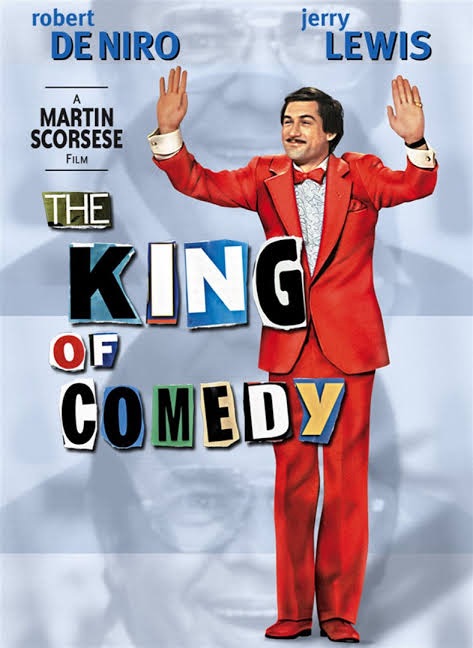
I hadn’t planned on celebrating Martin Scorsese’s acceptance of the Honorary Golden Bear from the Berlin International Film Festival by watching his 1982 movie, The King of Comedy, but it was leaving MUBI soon, so here we are. 😊 In a way, it seemed fitting because the film holds a special place in Scorsese’s career. Despite being the opening film at the Cannes Film Festival in 1983, it was largely overlooked at the box office, earning the unfortunate title of “flop of the year” from Entertainment Tonight. It serves as a reminder that honorary awards aren’t solely reserved for those who experience constant success, but rather for those who endure the ups and downs and persist in their craft. It’s a badge of resilience more than anything else.
In The King of Comedy, written by Paul Zimmerman, we follow a sociopathic aspiring comedian who goes as far as to kidnap his favorite presenter to perform his set on television. It’s a dark comedy about fame and celebrity worship, with origins rooted in true stories. Zimmerman, once a film critic turned screenwriter, became fascinated by the nature of obsessive fans and the dark side of fame after watching David Suskind’s program on autograph hunters. He also came across an article in Esquire about a man who meticulously assessed each episode of the Johnny Carson Show in his diary. In one interview, Zimmerman stated, “I started to think about connections between autograph hunters and assassins. Both stalked the famous – one with a pen and one with a gun.” The screenplay won the Best Original Screenplay at the BAFTA Awards in 1984, so kudos to Zimmerman!
Although the screenplay found success later, it wasn’t easy to convince Scorsese to direct it initially. Robert De Niro had purchased the rights to Zimmerman’s screenplay in 1976 and tried for quite some time to interest Scorsese in it.
I generally love films about the entertainment business, and this one was no exception. However, I must admit that I felt a little uncomfortable with the portrayal of the main character’s ambition. Breaking into the entertainment industry requires self-belief, even when nobody else believes in you. But this can lead to inevitable disillusionment. I can’t help but ponder on these questions: What is the healthy dosage of self-belief? What distinguishes a passionate writer from merely a disillusioned, pathetic loser when there is no honorary award in sight? And perhaps the most important one: Have I been guilty of any of these crimes in the past? Scorsese admits that Rupert Pupkin is a kind of younger version of himself, so I may breathe a sigh of relief, regardless of how I answer the last question.
Anyway, here is the link to the script if you have a penchant for old, photocopied versions of scripts: file (dropboxusercontent.com) via www.cinephiliabeyond.org
 A Screenwriter’s Journey
Leave a comment