This month, our Script Club focused on the Turkish version of Call My Agent! (the acclaimed French series Dix Pour Cent).
As I dug into the pilot script, I noticed the starkly different creative choices between the French and Turkish versions.
Sure, much of it comes down to culture, industry norms, and audience expectations but what fascinated me was how these elements translate into the dramatic codes of each country. And as a writer, I wondered if I could learn something from seeing how each remake reshaped the same story through its own lens.
Here is what I did to find out.
Let Your Ears Burn
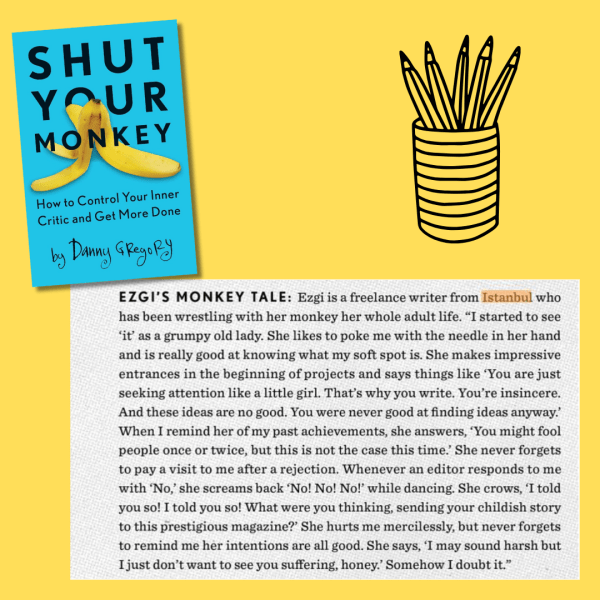
Let’s be honest. Sharing this piece brings both shame and joy.
Joy, because I first wrote it back in 2015 and it found its way into a book by Danny Gregory; one of my favorite voices on creativity.
Shame, because it’s a raw confession of my lifelong battle with my inner critic. Even now, my ears still burn when I reread it.
The Audio Bubble of Ex Machina
I would have easily missed it if I had only watched the movie. But reading the Ex Machina script made it impossible to ignore: Caleb’s isolation from the world is framed through sound, in both the beginning and the end.
Continue reading “The Audio Bubble of Ex Machina”Just a story?
Sometimes I can’t help but wonder: if we haven’t been personally transformed over the years, then what are we even doing in the storytelling business? Where do all those stories we take in go? Do we just watch them and think, “Well, that only happens in movies”? Are the characters the only ones who need to grow — while we remain safely untouched?
Continue reading “Just a story?”New Storytelling Journey Ahead: John Yorke’s Advanced Structure Training
I’ve always loved the first day of school — and today is no exception.
Here I am, sitting in my own room, yet connecting with writers from Australia to Portugal through John Yorke’s learning platform.
I’m especially excited about this journey, as the course offers a unique approach to online learning.
I plan to share my experiences and reflections here along the way — because sharing gives me a reason to pause and reflect.
And lately, I’ve come to believe that this, too, is an essential part of learning.

Gravy Pots and CenterFrame Script Club
The Bear is not my favorite TV show. It’s just too loud and fast for my highly sensitive senses. I can feel the tension building in my body scene by scene, and by the end, I just want to throw a gravy pot at the wall—just like Carmy did in a scene from the pilot script that didn’t make the final cut.
Continue reading “Gravy Pots and CenterFrame Script Club”Why Adapt?
Yesterday, I had a chance to join the Pop Up Series Incubator info call. Since the program is aimed at European screenwriters and producers, I’m not eligible for it, but I still wanted to be there and learn more about it. Just because: 1- Adaptation is one of my focuses as a writer. 2- I know firsthand how well-thought their programs are from my experience at the Netflix Adaptation Lab, also created by Tatino Films.
Lately, we’ve been witnessing the rise of IP-based drama around the world, and I feel it’s more rewarding than ever to have a work based on pre-existing IPs as writers and producers.
But why?
Continue reading “Why Adapt?”My Experience of Shonda Rhimes Course on MasterClass
I just finished Shonda Rhimes’ “Pitch & Write Stories for Film and TV” course on MasterClass. It’s very beginner-friendly, like most courses on the platform. Actually you don’t even have to be a writer to follow along; it offers a great peek into the story-breaking process and gives you a taste of the writer’s room experience if you’re interested.
Continue reading “My Experience of Shonda Rhimes Course on MasterClass”An Alternative Storytelling Process
Yesterday, I had the chance to attend an online presentation by LIM (Less is More), the European feature film programme. While the presentation focused primarily on their upcoming year-long training programme for story development, it gave me valuable insights into their overall philosophy. I must say, I’m quite impressed by their humanistic approach to storytelling.
Continue reading “An Alternative Storytelling Process”It’s Teamwork
Some time ago, a producer seemed genuinely surprised that I have my own mind. I was equally surprised—why hire me if you don’t want me to use it?
If all I’m expected to do is write exactly what I’m told, then why have I been watching countless movies and TV shows from around the world, studying screenwriting books meticulously, and racking my brain over the mechanics of storytelling?
Continue reading “It’s Teamwork”